
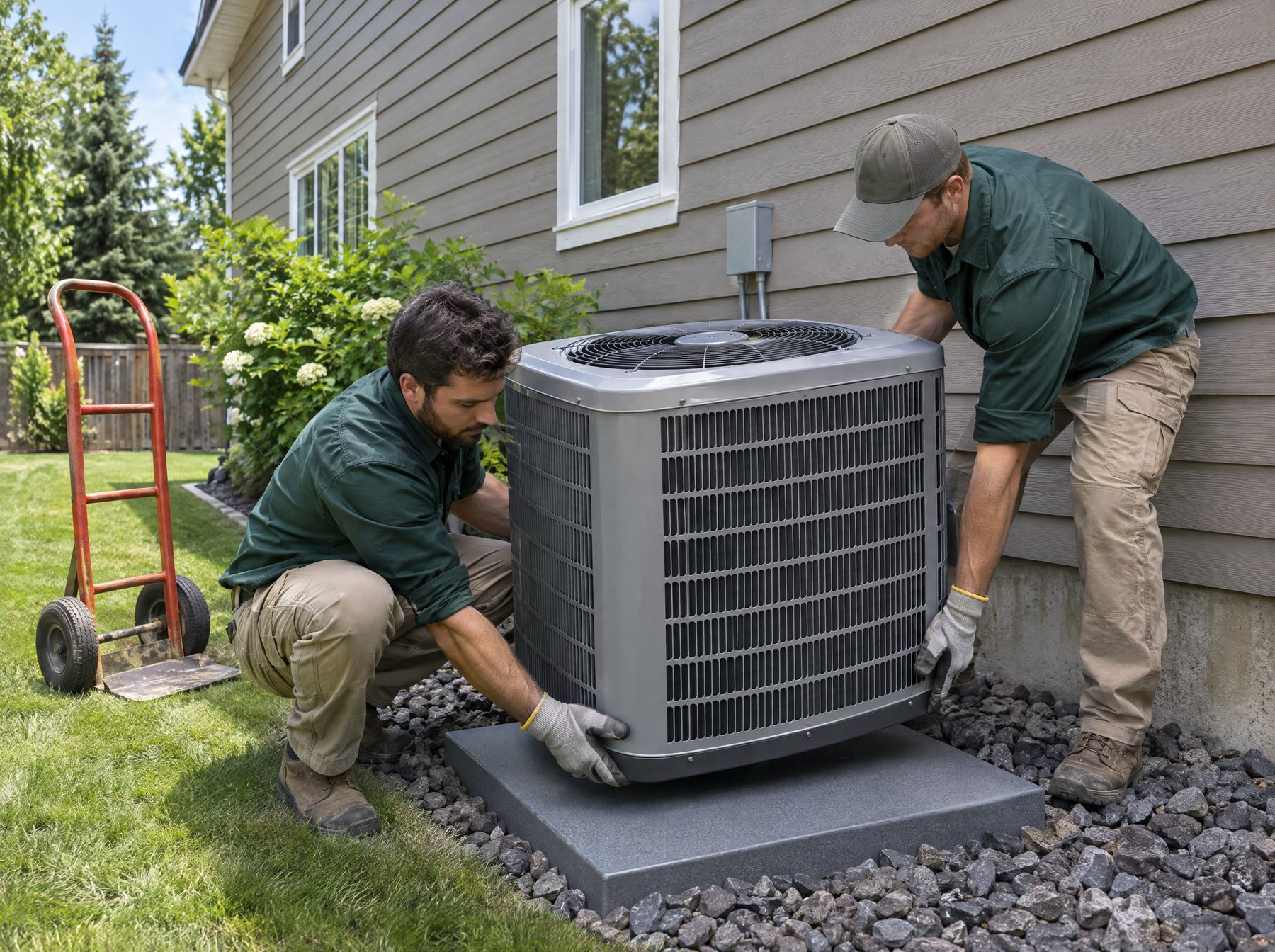
AC installation in Spokane
A lot of houses around Spokane were built to cool off with the windows open at night. On smoke days that stops working, and more Spokane houses now add air conditioning or replace a tired unit for exactly that reason. We size the new system to the house, room by room, and build the filter slot so it can clean the air while it cools.
- Sized by a room by room load calculation
- Built for days the windows stay shut
- Filter slot and blower checked for MERV 13
- Written price, line by line
Tell us about the house and the cooling you have now
We usually answer the same day, and within the hour when a house has no heat or no cooling.
No heat or no cooling and someone at home is elderly, unwell or very young? Call or text now: 509-555-0163
Built for the days the windows stay shut
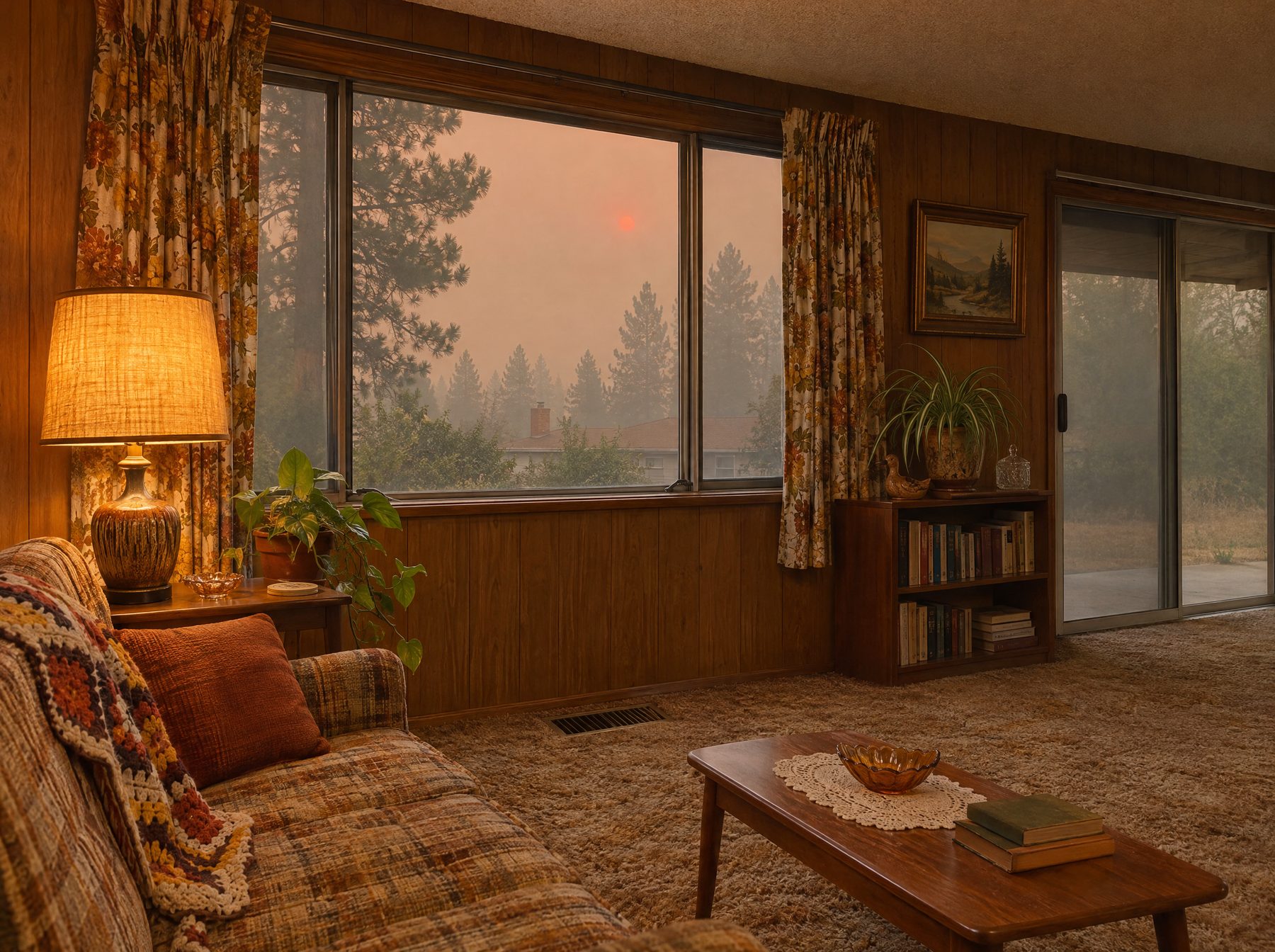
Spokane's summers are dry and mostly mild: a normal July high is 84.4°F at the airport and the nights cool off to the high 50s. For years that meant fans and open windows. The trouble is the smoke. Spokane Clean Air counts an average of 7.3 unhealthy smoke days a year over 2017 to 2026, and those days come in the hottest, driest weeks, when opening a window lets the smoke in.
So an air conditioner here is not only about the 20 or so days a year over 90°F. It is about keeping the house livable with everything closed. That changes what we look at: the system has to run long enough to cool the far rooms, and while it runs it should be pushing the air through a filter that catches fine particles.
“Our old air conditioner quit during a heat wave and the first quote was for the biggest unit on the truck. Corinne measured the house instead and put in a smaller one that runs longer and keeps the upstairs cool. She also changed the filter slot so it takes a thicker filter. It was written down and the price did not change.”
What a Spokane summer asks of an air conditioner
NOAA's 1991 to 2020 normals at Spokane International Airport, and Spokane Clean Air's smoke day average.
84.4°F
Normal July high
With a normal July low of 57.6
20.8days
At 90°F or hotter in a year
Heat waves are when undersized units fall behind
0.42inches
Normal July rain
Dry weeks, which is when the smoke arrives
7.3days a year
Unhealthy smoke days, 2017 to 2026
Windows shut, AC and filter carry the house
How an AC installation goes
The day of the install is the short part. Most of the care goes in before it.
We measure the house.
A room by room load calculation, plus the duct sizes and the return, because cooling needs more airflow than heat.
We check the filter slot and blower.
Can the blower push air through a MERV 13 filter? If not, what is the highest it can take, and does the rack hold it tight?
We install.
Outdoor unit on a level pad, matched indoor coil, new line set where the old one will not do, drain and safety switch.
We test and show you.
Airflow, refrigerant charge, the temperature drop across the coil. Then we show you the thermostat settings for smoke days.
What should be on an AC quote
If a quote is missing one of these, ask for it.
| Line | Why it matters |
|---|---|
| Load calculation result | The size should come from the house, not from the old unit's label. |
| Matched indoor coil | An outdoor unit is rated with a specific coil. A mismatch can miss the rating. |
| SEER2 rating | The efficiency number for the system as quoted, outdoor unit and coil together. |
| Refrigerant | Which one, and whether the equipment is the newer kind or older R-410A stock. |
| Filter rack | What filter it holds and whether the blower can move air through it. MERV 13 where it fits. |
| Permit | Who issues it for your address. It changes from city to city and at the state line. |
A filter slot that actually holds the filter
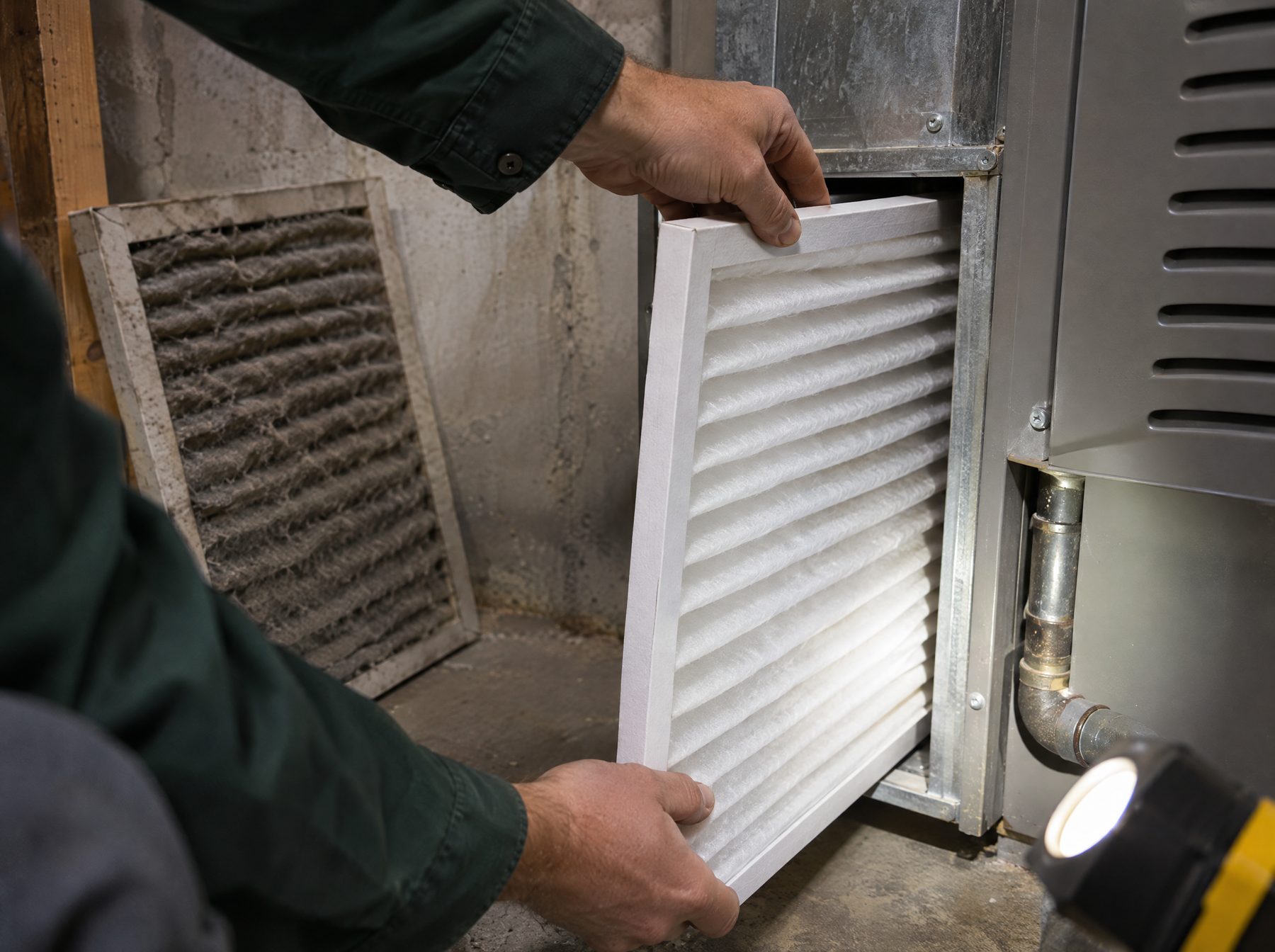
Many furnaces leave the factory with a slot for a thin filter and a gap around it. Air takes the easy way round, so even a good filter lets a share of the air skip it. EPA's wildfire smoke guidance is plain about this: choose a MERV 13 filter, or the highest rating the system fan and filter slot can take, and make sure it fits snugly so air does not leak around it.
On an AC install we look at the slot as part of the job. Where the blower can take it, we fit a deeper rack that holds a thicker filter with a gasket. A thicker filter also loads more slowly, which matters on weeks when smoke fills it fast. On smoke days, set the fan to run and keep any fresh air intake closed or on recirculate.
Three ways to add or replace cooling
What makes sense depends on the house you have and how long you plan to stay.
Central air on your furnace
An outdoor unit and an indoor coil on top of the furnace you have. The usual choice when the furnace and ducts are sound.
A heat pump in place of the AC
Cools the same way, and heats through much of the winter, with your furnace as the backup.
Ductless for the hot rooms
The upstairs bedroom that never cools, the room over the garage, an addition. One indoor head per room, no ducts.
AC installation around Spokane Valley
We drive out from our office on the Spokane Valley floor. Each town has its own page with the drive, the houses we see there and the office that issues the permit, because that office changes as soon as you cross a city line, and again at the state line.
Spokane
About 10 miles, 14 minutes west. Permits through the City's Development Services Center, and gas work needs a City gas heating mechanic license.
Liberty Lake
About 8 miles, 14 minutes east. The City issues its own mechanical permits, even for a like for like furnace swap.
Mead
About 11.5 miles, 22 minutes north, on the road toward Mount Spokane. Unincorporated, so Spokane County issues the permit.
Cheney and Post Falls
About 26 miles southwest to Cheney, which runs its own building department, and 15 miles east across the line to Post Falls, Idaho.
AC installation questions we hear most
What size air conditioner does my house need?
The one your house calls for, which is not always the one on the old unit's label. We do a room by room load calculation: the walls, the windows, the insulation, which rooms face west into the afternoon sun. A unit that is too big cools in short bursts and leaves the far rooms warm; one that is too small runs all afternoon in a heat wave and still falls behind.
Can you add central air to a house that only has a furnace?
Usually, yes. If the furnace and ducts are in good shape, we add an indoor coil on top of the furnace and an outdoor unit, and the furnace blower moves the cool air. We check the blower, the duct sizes and the return first, because air conditioning needs more airflow than heat alone. If the furnace is near the end, we will tell you, and a heat pump may make more sense.
Should I get a heat pump instead of an air conditioner?
Often worth pricing both. A heat pump cools exactly like an air conditioner and also heats through much of the winter. With a gas furnace kept as the backup, it can lower how much the furnace runs. See heat pumps. If you only want cooling, a straight air conditioner is simpler and we will quote it that way.
Which refrigerant will a new system use?
New residential air conditioners and heat pumps installed since January 1, 2025 use refrigerants with a global warming potential of 700 or less. EPA's final rule of May 26, 2026 removed the earlier installation deadline. So systems built with older R-410A components may still be installed, and you may see both on quotes. We tell you which one we are quoting and why.
Is there a rebate?
Avista runs Washington single family energy rebates for its customers, and the list changes. We do not quote amounts; check the utility's page or ask us to help you look. The federal 25C tax credit ended for systems placed in service after December 31, 2025.
How long does an AC installation take?
Most single system installs take one day once the equipment is here. Adding cooling to a house that never had it, or fixing ducts at the same time, can take a second day. You will know before we start.
Tell us about the house and the cooling you have now
Whether there is any cooling now, how old the furnace is, and which rooms get hottest. We will set up a time to measure.
Book an AC quote
We usually answer the same day, and within the hour when a house has no heat or no cooling.
No heat or no cooling and someone at home is elderly, unwell or very young? Call or text now: 509-555-0163