
Heating and cooling in Spokane
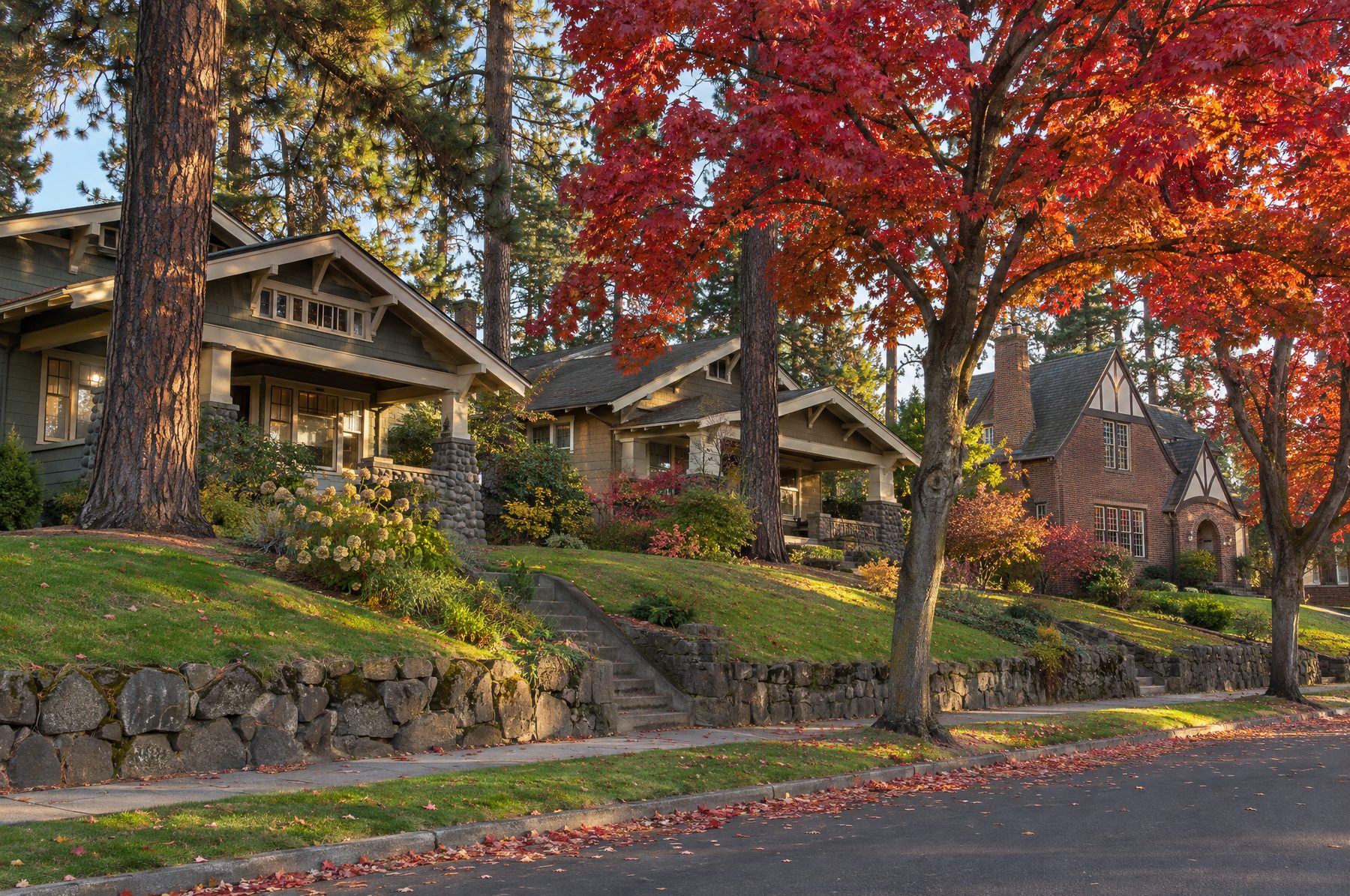
Spokane sits where the valley narrows and the river drops over the falls downtown. The houses run from South Hill Craftsman bungalows and brick Tudors to postwar ranches on the north side, and most of them were built long before anyone shut the windows for smoke. We set the system up to keep the smoke out in August and the house warm in January, pull the City permit, and stay for the inspection.
- About 9.7 miles from our office
- City mechanical permit filed for you
- Gas work under a City gas heating mechanic license
Book a visit in Spokane
We usually answer the same day, and within the hour when a house has no heat or no cooling.
No heat or no cooling and someone at home is elderly, unwell or very young? Call or text now: 509-555-0163
Old houses on the hill, and air that comes in through every gap
Fly west from our office along the river and the valley floor drops away at Spokane Falls, about 1,771 feet, right in the middle of downtown. Downtown itself sits at about 1,843 feet, and the neighborhoods climb from there: up the South Hill, out to the north side, across the river to the west. A lot of the houses we work in on the South Hill were built in the first half of the last century, with gravity furnaces long since replaced, ducts fitted later into walls and closets that were never meant to hold them, and a basement return that pulls from wherever it can.
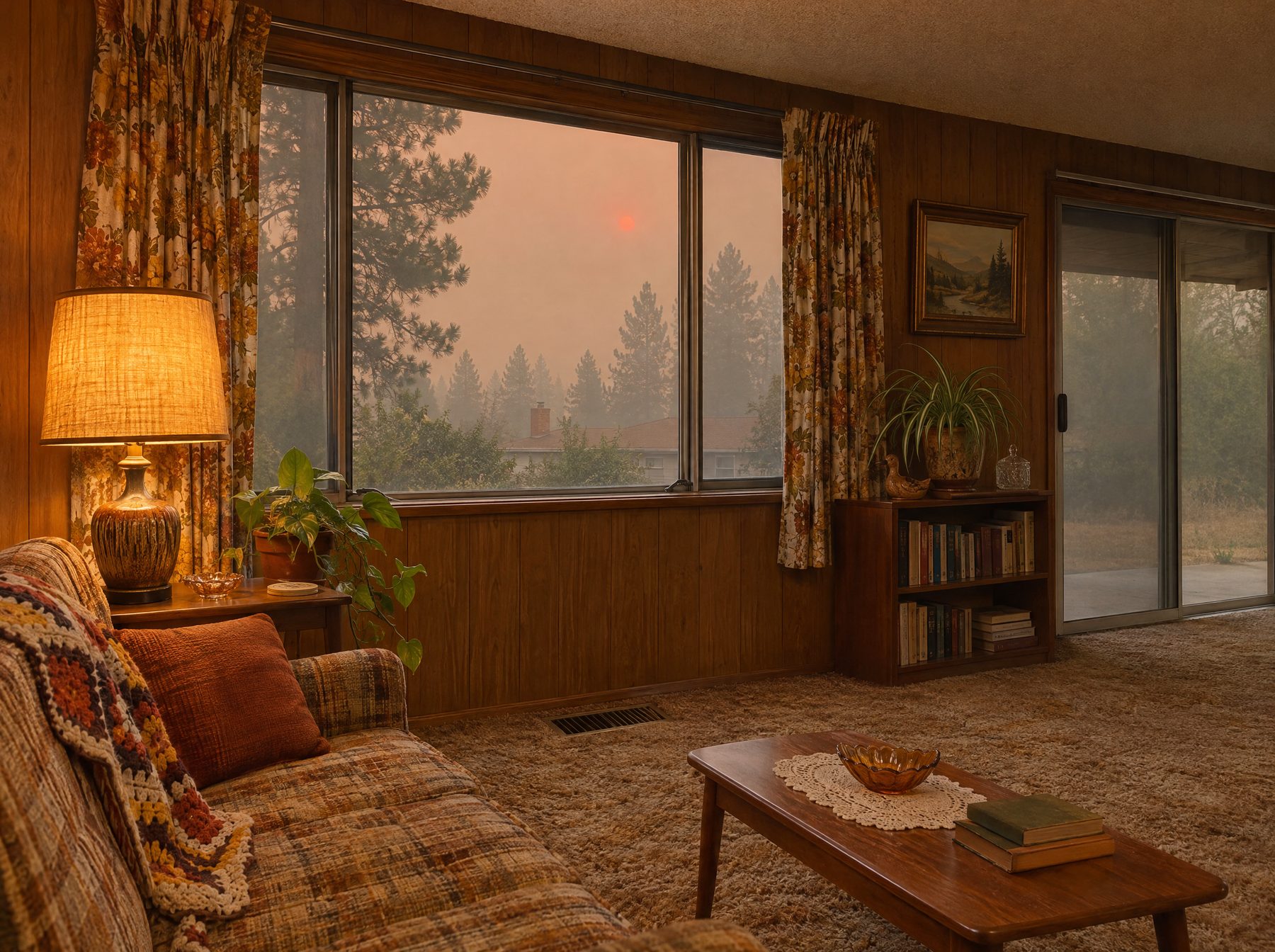
That matters most in smoke season. The EPA says wildfire smoke gets into a house three ways: through open windows and doors, through fans and systems with a fresh air intake, and through small openings, joints and cracks. Old houses have more of the third kind. A return duct that leaks in the basement or the attic pulls in whatever air is there, and on a smoky September day that air is smoke. Spokane Clean Air counts an average of 7.3 unhealthy smoke days a year over 2017 to 2026, and in September 2020 the smoke held the air in the hazardous range across most of Eastern Washington for days.
So before we talk about equipment, we walk the house. We look at the filter rack and whether the filter fits snugly, the return and its joints, the fresh air intake if there is one, and the gaps a smoke pencil finds. EPA guidance is a MERV 13 filter, or as high a rating as the fan and filter slot can take, fitted so air cannot slip around it. On many older systems that takes a new filter rack, and sometimes a fan setting change, and we test it before we leave.
Then there is the other half of the year. The Spokane airport records 6,463 heating degree days and 132 nights at or below freezing in a normal year (NOAA 1991 to 2020). A heat pump has to be sized for that, room by room, and where a gas furnace is already in the house we often keep it as the backup for the coldest nights.
The City permit desk
Mechanical permits in Spokane come from the City's Development Services Center on the third floor of City Hall, 808 W Spokane Falls Boulevard. The City's mechanical code is the International Mechanical Code and Fuel Gas Code as modified by Chapter 17F.090 of the Spokane Municipal Code. We file it and meet the inspector.
Gas work needs its own license
The City's mechanical permit form says a Gas Heating Mechanic License is required for any proposed work involving gas lines or gas equipment. If anyone is touching your gas furnace or its piping in Spokane, ask to see it.
The duct leakage affidavit
Under the Washington State Energy Code, the City's form says a Duct Leakage Affidavit may be required before final inspection when equipment is replaced or installed in a house. Ductwork for a replaced furnace or air conditioner is already included with those appliances on the permit. We test the ducts and fill in the affidavit when it is asked for.
The wiring side
In Washington, the wiring side of a furnace or heat pump is electrical work, done under an L&I HVAC/refrigeration (06A) certificate. The City form also asks for an electrical permit for HVAC circuits other than low voltage.
The rest of our area
We also work in Liberty Lake, Mead, Cheney and Post Falls, and in Spokane Valley itself, where our office is. Every town page names the office that issues the permit there. See all the areas we serve.
From our Spokane Valley office to Spokane: how a visit goes
Spokane is about 9.7 miles west of our office in Spokane Valley, around 14 minutes in free traffic down I-90 to downtown. The South Hill and the north side run a little longer, and rush hour longer still, so we give you a real arrival window when you call.
You call, text or send the form.
Tell us the address and what the house does in smoke season and in the cold.
We walk the house.
The filter, the return, the ducts, the gaps, the equipment, room by room.
We show you what we found.
What is wrong, what it takes, and a written price.
We come back before smoke season.
A spring check, so the house is ready before the windows have to shut.
Heating and cooling work we do in Spokane homes
Smoke in the house
Leaky returns found and sealed, a filter rack that holds a MERV 13 snug, and the fresh air intake set to close on smoke days.
Cooling with the windows shut
A first air conditioner for an older house, or a heat pump that cools in August and heats in January.
A furnace that will not light
Ignition lockouts, dirty flame sensors and short cycling, with gas work under the City license.
An air conditioner that quits
Warm air, ice on the line or a condenser that stops in a heat wave, found and fixed.
Run by its owner, from our Spokane Valley office
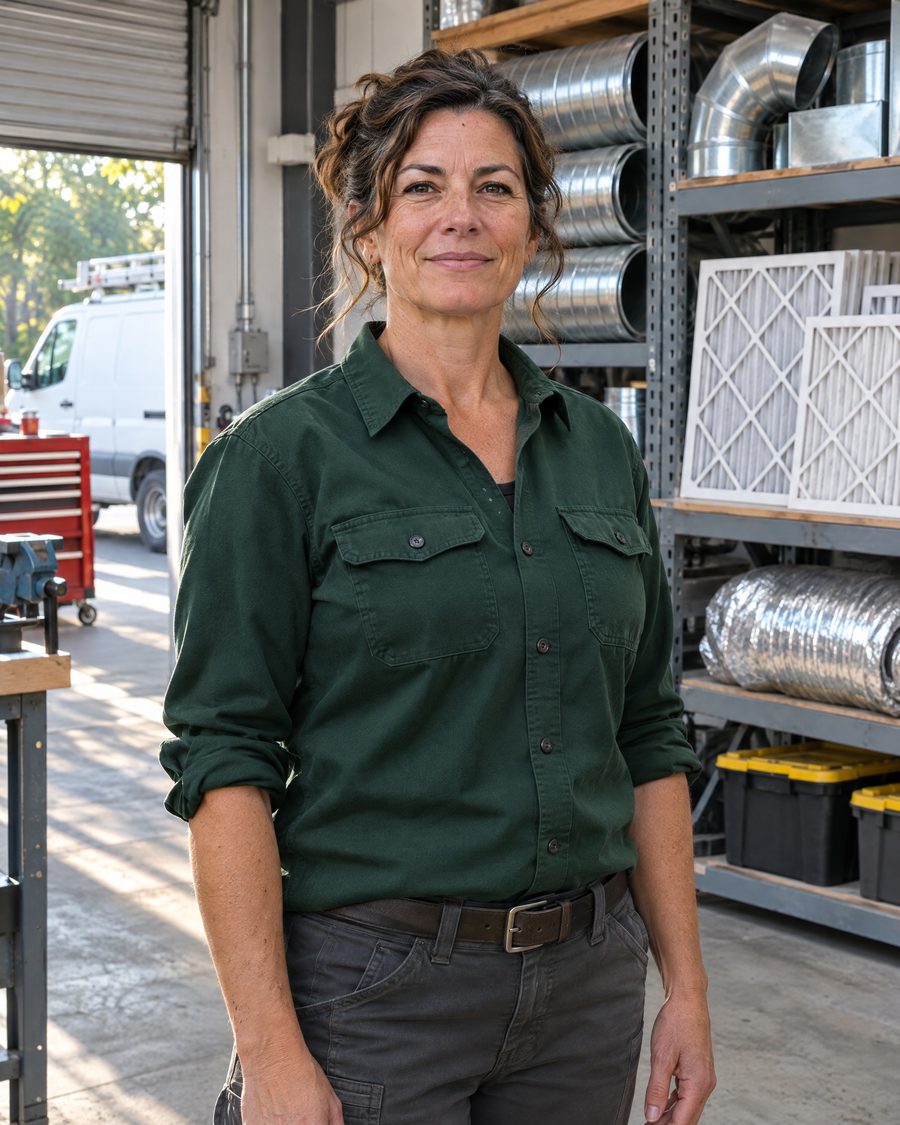
Corinne Haldane, owner and lead technician
Corinne answers the phone, walks the house, does the load calculation and writes the price. You deal with her from the first call to the visit before the next smoke season.
Book a visit in Spokane
We usually answer the same day, and within the hour when a house has no heat or no cooling.
No heat or no cooling and someone at home is elderly, unwell or very young? Call or text now: 509-555-0163
Before you call about heating or cooling in Spokane
Do I need a permit to replace my furnace in Spokane?
Yes. The City's Development Services Center issues mechanical permits, and gas work needs a City Gas Heating Mechanic License. We file the permit and meet the inspector. See furnace repair.
What is the duct leakage affidavit?
The City's permit form says that, under the Washington State Energy Code, a Duct Leakage Affidavit may be required before the final inspection when HVAC equipment in a house is replaced or installed. It records how much the ducts leak. We test and fill it in when it is asked for. See duct cleaning and sealing.
Our South Hill house smells of smoke with the windows shut. Why?
Usually leaky return ducts, gaps around the filter, or a fresh air intake left open. Old houses have more joints and cracks for smoke to find. We trace it with a smoke pencil and show you before we suggest a fix. See duct cleaning and sealing.
Can our old furnace take a MERV 13 filter?
Sometimes as it is, often with a deeper filter rack. EPA guidance is a MERV 13 or as high a rating as the system fan and filter slot can take, fitted snugly. We check the fan and the airflow with the new filter in before we leave. See maintenance plans.
Should we add air conditioning to an older house?
Many Spokane houses now do, because smoke days mean the windows stay shut in the hottest weeks. The airport averages 20.8 days a year at 90 degrees or more, and hit 109 on June 29, 2021. We size it by a load calculation for your rooms. See AC installation.
Tell us what your Spokane house does in smoke season and in the cold
Send it to Corinne
We usually answer the same day, and within the hour when a house has no heat or no cooling.
No heat or no cooling and someone at home is elderly, unwell or very young? Call or text now: 509-555-0163